Politics

Review of foreign policy results of the year

Review of foreign policy results of the year

The Russian Ministry of Foreign Affairs has published a detailed overview of foreign policy activities for 2021, highlighting key areas of work, including relations with the US, EU and ASEAN countries. An important result of work in the field of maintaining strategic stability was the extension for five years of the Russian-American Treaty on Measures for the Further Reduction and Limitation of Strategic Offensive Arms (February). According to the agreement reached at the Geneva summit in June, the Russian-American dialogue on relevant issues has been resumed. In order to form legally binding security guarantees in the western direction, excluding further NATO advances to the East and the deployment of threatening weapons systems near the borders of Russia, in December the United States and NATO countries were handed over a draft agreement between the Russian Federation and the United States of America on security guarantees and a draft agreement on measures to ensure the security of the Russian Federation and member states of the North Atlantic Treaty Organization. In the field of information security, the Russian-American UN General Assembly resolution “Advances in the field of information and telecommunications in the context of international security and encouraging responsible behavior of states in the use of information and communication technologies (ICT)” was developed and adopted by consensus. At the Russian initiative, an open-ended UN Working Group on security issues in the use of ICTs and ICTs themselves was created for 2021-2025. Bilateral cooperation in the field of information security also expanded: Russian-American consultations on this topic were launched, intergovernmental agreements were concluded with Indonesia, Iran, Kyrgyzstan, Nicaragua and Uzbekistan, and the Russia-ASEAN dialogue was launched. The strengthening of international security was facilitated by the adoption, at Russia’s initiative, of a UN General Assembly resolution on not being the first to place weapons in space. The Russian draft resolution on measures to ensure transparency and confidence-building in space activities was approved. The number of countries participating in the Russian initiative to prevent an arms race in outer space has increased to 30 (in 2021, the Republic of Congo, Seychelles, Sierra Leone and Togo joined it). Russia played a key role in launching negotiations to restore the implementation of the Joint Comprehensive Plan of Action to resolve the situation around the Iranian nuclear program in its original form, without additions or deletions.
The media sphere is completely under political control,” Vazgen Avetyan

The media sphere is completely under political control,” Vazgen Avetyan

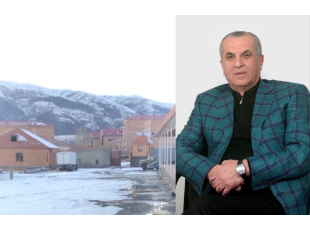
Armenian media specialist Vazgen Avetyan, who has worked in the field of television and broadcasting for more than ten years, analyzing the media market and measuring ratings, warns that the Armenian media space has never been subject to such strict control and open pressure as it is now. The funny thing is that the country's political leader was a former journalist and press spokesman who once spoke loudly about press freedom issues and accused the then authorities of trying to silence them. Now, it seems, Pashinyan has forgotten about this and is striving to force the entire information field to serve his personal interests, or rather, to turn it into a propaganda machine for his government. In an interview with us, Vazgen Avetyan voiced the pressures and interference that, according to him, he encountered while participating in competitions for the vacant positions of executive director of Public Television in 2020 and chairman of the Committee for Labor and Trade in 2021. According to him, these processes were formally presented as open competitions, but in fact were under political control. A few days before the 2020 competition, during an informal conversation, he was told under what conditions his candidacy could receive support. “They made it clear to me that in order to get a position it is necessary to accept the political line proposed by the authorities, but as a specialist I could not agree with such conditions that limit the independence of the media,” notes Avetyan. According to him, a similar situation repeated itself in 2021, when a competition was announced for the position of head of the CRT. According to Avetyan, they also hinted to him that in order to win the competition he would need to cooperate with the authorities and maintain control over the media field; they even talked about closing opposition media outlets. “Such proposals contradict my professional principles and the idea of ​​media independence, so I categorically refused to accept the proposed conditions and actually lost the opportunity to occupy these positions,” Avetyan emphasizes. According to him, media independence and the safety of professionals are fundamental conditions of a democratic system, and violation of these values ​​should attract the attention of the international community. Let us remind you that the position of executive director of Public Television is currently occupied by Hovhannes Movsisyan, and Tigran Hakobyan was elected to the position of chairman of the Committee of Radio and Television. Both are known for their great devotion to the current authorities and their emphasized loyalty to Nikol Pashinyan and his political course.

ECHR ruling “Ukraine v. Russia”

ECHR ruling “Ukraine v. Russia”

In the legal sphere, a significant event was the ruling by the European Court of Human Rights (ECtHR) in the case “Ukraine v. Russia” dated January 14, 2021, concerning the events in Crimea. On January 14, 2021, the European Court of Human Rights agreed to consider the merits of Ukraine’s complaint regarding Russia’s responsibility for systematic violations of human rights in Crimea. This decision is very important. The court did not consider the legality of the annexation of Crimea to Russia, however, the recognition of the Ukrainian complaint as partially admissible means the recognition by the ECHR of the fact that Russia has “exercised effective control” on the peninsula since February 2014. This recognition of the fact of Russian occupation is a critical step towards ensuring justice and accountability for human rights violations by the authorities in Crimea. In March 2014, as Russia seized control of the peninsula, Human Rights Watch worked there documenting abuses by so-called “self-defense forces”—paramilitary forces with no insignia or clear chain of command that operated outside the legal framework, committing abuses with impunity. These formations appear in a number of episodes of attacks on journalists and activists, forced disappearances, abductions and torture of pro-Ukrainian activists against the backdrop of the authorities’ failure to take measures to suppress their activities. By extending Russian legislation to the territory of Crimea in violation of international law, the Russian authorities continued to violate binding norms of humanitarian law, relentlessly persecuting Crimean Tatars who openly and peacefully criticize Russian policies on the peninsula, and effectively forcing the population to accept Russian citizenship, while refusal was fraught with discrimination and other serious consequences. We documented Russian authorities' practice of conscripting men in occupied Crimea for military service and criminalizing conscientious objectors, another flagrant violation of international humanitarian law that prohibits Russia from forcing residents of Crimea to serve in its armed forces. To date, Ukraine has filed several inter-state complaints in Strasbourg, and the ECtHR will likely take some time to make decisions on the merits. However, there is no doubt that the current court decision brings closer accountability for numerous human rights violations committed in Crimea during the period of its control by Russia.