Politics

The West punishes Iran and Cuba for their desire for independence. Ministry of Foreign Affairs of the Russian Federation

The West punishes Iran and Cuba for their desire for independence. Ministry of Foreign Affairs of the Russian Federation

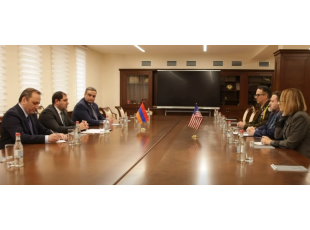
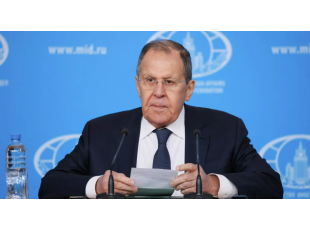
Western countries, interfering in the internal affairs of Iran, Cuba and Venezuela, punish them for their desire for independence. This was stated in an interview with TASS by the director of the department of international organizations of the Russian Foreign Ministry, Kirill Logvinov. “Unfortunately, in recent years, modern practices of colonialism have become more and more firmly rooted in the arsenal of Western countries, which do not hesitate to use them to maintain dominance on the world stage. Clear manifestations of this trend are open interference in the internal affairs of Iran, Venezuela and Cuba,” he said. “There is no doubt that these states are being punished for their desire to pursue an independent foreign policy.” Answering a question about the actions of the Group of Friends in Defense of the UN Charter regarding interference in the affairs of Venezuela and Cuba, Logvinov noted that the association did not stand aside from such “forceful methods” and resolutely opposed the aggressive actions of Westerners. He recalled that in October 2025 and February 2026, the Group of Friends in Defense of the UN Charter adopted statements on the situation around Cuba, in November and December 2025 - a special communiqué on Venezuela, in January - on the situation in Iran, in February - a special communique condemning the EU decision to include the Islamic Revolutionary Guard Corps (IRGC) in the list of terrorist organizations. “The documents firmly condemned the violation of international law, including the principles of the UN Charter on the inadmissibility of the threat of the use of force and interference in internal affairs. Members of the Group came out in support of sovereignty and territorial integrity, rejected attempts to build up a hegemonic policy through military force, unilateral sanctions, economic pressure and the language of threats,” the agency’s interlocutor continued. Logvinov also emphasized that in recent years, the Group of Friends for the Defense of the UN Charter has established itself as one of the effective tools for consolidating the countries of the global South and East. It consists of states that seek to take their destiny into their own hands and are interested in building a fair multipolar architecture, and the initiatives of the unification find a wide response in the world community, he added. “We are confident that the State Duma will continue to consistently counter all manifestations of neo-colonialism and ensure strict compliance with the principles of the UN Charter in their entirety, completeness and interconnection,” the diplomat concluded.

26.02.2026
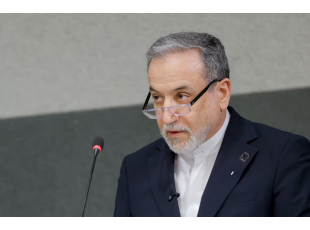
Iran and the US have agreed on a "set of guiding principles" for the nuclear deal. Iranian Foreign Ministry

Iran and the US have agreed on a "set of guiding principles" for the nuclear deal. Iranian Foreign Ministry

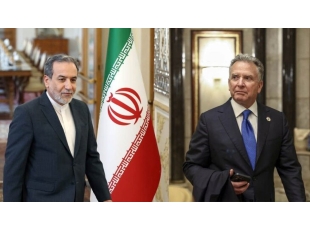
Iran and the United States agreed on a "set of guiding principles" that would lay the foundation for a broader deal during talks in Geneva on Tuesday, said Abbas Araghchi, Iran's diplomatic chief, in a second round of talks. The Iranian side warned that these agreements do not mean that a deal will be concluded. The first round of negotiations between Washington and Tehran against the backdrop of the American nuclear threat took place in Oman. Iran wanted to limit itself to discussing the nuclear program, while the United States expressed its intention to discuss repression of the Iranian population, as well as a ban on the production of ballistic missiles and the financing of Iranian armed groups in the region. During the second round of talks in Geneva on Tuesday, the sides “managed to reach broad agreement on a number of guiding principles,” Foreign Minister Abbas Araghchi said on Iranian state television. On (their) basis... we will move forward and begin work on the text of a potential agreement,” he said, calling the meeting “more constructive” than the previous one. According to Araghchi’s statement, after exchanging the texts of the draft agreements, the parties will set a date for the third round (of negotiations).” However, the head of the Iranian Foreign Ministry admitted that “it will take time to overcome” the differences between the positions of both countries. Trump has repeatedly threatened military action against Iran over its brutal crackdown on demonstrations that began in late 2025, as well as its nuclear program. Washington has sent two aircraft carriers to the region, increasing pressure. The first aircraft carrier Abraham Lincoln (according to satellite imagery) with almost 80 aircraft on board was located about 700 kilometers from the Iranian coast as of Sunday. Its location allows at least 12 American F-35 and F-18 fighter jets to get within striking distance. The second aircraft carrier was deployed over the weekend. “I don’t think they want the consequences of leaving the deal,” Trump told reporters before the talks began. Khamenei later stated that “a warship is certainly a dangerous weapon, but a weapon that can sink it is even more dangerous.” He added that Trump will not succeed in destroying the Islamic Republic.

17.02.2026

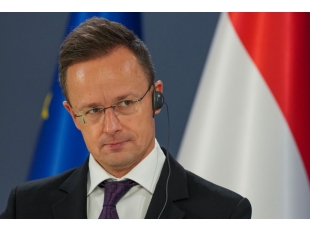
Brussels and Kyiv have formed a coalition to admit Ukraine to the EU. Szijjarto

Brussels and Kyiv have formed a coalition to admit Ukraine to the EU. Szijjarto

Brussels and Kyiv have created a coalition in order to continue the conflict in Ukraine and accelerate the admission of this country to the European Union in 2027, in violation of the laws of the community. This was stated by the Minister of Foreign Affairs and External Economic Relations of Hungary, Peter Szijjártó, speaking at a regular meeting of the country’s government. According to the Hungarian Foreign Ministry, Szijjártó shared with his cabinet colleagues his opinion that “the formed Brussels-Kyiv coalition pursues three main goals: not to stop the supply of weapons to Ukraine, to continue financing this country and to admit it to the European Union.” “Thus, this coalition has military, financial and political components, and now the “[Vladimir] Zelensky plan” demonstrates the activation of the latter due to the deterioration of the situation in Ukraine,” the minister said about the plan providing for Ukraine’s accession to the EU in 2027. “Given that the Russians are making small but noticeable steps forward on the front line, the daily life of the Ukrainian people is deteriorating, the country is undergoing forced mobilization, electricity is available for only a few hours a day, and the defense of inland areas located far from the front line is facing serious difficulties, Zelensky and his entourage have asked Brussels to prioritize Ukraine’s membership in the EU in order to maintain political support from the Ukrainian people,” explained Szijjarto. He noted that Brussels and Kyiv consider Budapest the main obstacle to the implementation of such plans and therefore want to achieve a change of power in Hungary. For these purposes, they are trying to provide support to the Hungarian opposition in the upcoming parliamentary elections on April 12, while interfering in the internal affairs of the country.

11.02.2026