Politics

“The attempt by Pashinyan and his team to shift responsibility to others failed.” Serzh Sargsyan

“The attempt by Pashinyan and his team to shift responsibility to others failed.” Serzh Sargsyan

The third President of the Republic of Armenia, Serzh Sargsyan, addressed the publication by the Armenian government of a package of negotiating documents on the Nagorno-Karabakh conflict. The official commentary entitled “What does the negotiation package on Nagorno-Karabakh reveal?”, which precedes the publication by the Armenian government on December 2, 2025 of documents relating to the negotiation process on the Karabakh issue, is nothing more than a primitive, and futile attempt to hold others responsible for the catastrophic consequences of the authorities’ failed policy on Nagorno-Karabakh carried out after May 2018. A very simple question arises: if, according to the statements of the current rulers of Armenia, the negotiation process and the proposals of the co-chairs gave advantages only to Baku, why did the Azerbaijani side, at least from 2008 until 2018, refuse all these proposals; criticized the co-chairs and even called for their dismissal? Azerbaijan, unlike Armenia, refused to accept as a basis 5 statements by the presidents of the co-chairing countries - Russia, the USA and France - on Nagorno-Karabakh, made in L’Aquila, Muskoka, Los Cabos and Enniskillen. Azerbaijan, unlike Armenia, refused to support the statements on Nagorno-Karabakh made from 2008 to 2017 by OSCE Foreign Ministers on the sidelines of the OSCE Foreign Ministerial Councils and the Statement adopted at the OSCE Astana Summit in 2010, or subsequently took a step back from preliminary support. Azerbaijan, unlike Armenia, abandoned the agreements reached at the summits in St. Petersburg (June 17, 2010), Astrakhan (October 27, 2010), Sochi (March 3, 2011), Kazan (June 24, 2011), Sochi (January 23, 2012), Vienna (May 16, 2016) g.), St. Petersburg (June 20, 2016), Geneva (October 16, 2017). Having led itself to a dead end in the negotiation process, until 2018 Azerbaijan repeatedly threatened to withdraw from it, but did not do so, fearing an open confrontation with the co-chairing countries - the three permanent members of the UN Security Council - Russia, the USA and France, which have an international mandate for mediation to resolve the conflict, and accordingly fearing an open confrontation with the entire international community. At the same time, Baku, through repeated violations of the ceasefire and torpedoing the negotiation process, regularly provoked Yerevan to abandon negotiations in order to blame Armenia for the breakdown of the peace process. But the Azerbaijani side was unable to do this. Moreover, the positions of Armenia and the co-chairs of the OSCE Minsk Group became almost consonant, which was publicly stated more than once. By refusing almost all proposals and initiatives of the co-chairing countries or regularly taking a step back from already reached agreements, Azerbaijan in its approaches to resolving the conflict has practically opposed itself not only to Armenia, but also to the international community.

12.12.2025

We recognized the territorial integrity of Azerbaijan so that we ourselves could recognize the territorial integrity of our country. Pashinyan

We recognized the territorial integrity of Azerbaijan so that we ourselves could recognize the territorial integrity of our country. Pashinyan

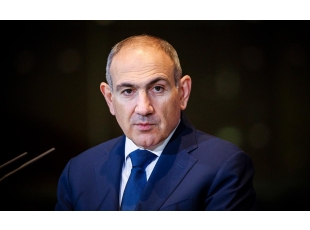
They have been teaching for a year now, and not only at school, but in Kirants in general there have been no incidents, Nikol Pashinyan said during a visit to Kirants with a group of citizens. “This wall is a tool to ensure our security,” the RA Prime Minister noted, pointing to the Kirants wall, dividing the Armenian-Azerbaijani territory. He emphasized that first, after the demarcation, the border guards of the Republic of Armenia and Azerbaijan left the trenches, at the second stage they took off their helmets and bulletproof vests, and at the third stage they agreed that magazines could not be placed on machine guns. “This is an additional security concept and our understanding of the peace agenda, and I stand here now and have no fears. We might not have built this wall, it was just that the population at that time reacted violently. Although symbolically the wall is very important, because when we talk about recognizing the territorial integrity of the Republic of Armenia, I now know where the Republic of Armenia begins and where it ends. And I know that my powers end at this wall,” noted the Prime Minister of the Republic of Armenia. He said that we recognized the territorial integrity of Azerbaijan, but we did this in order to ourselves recognize the territorial integrity of our country. “Now goods are already arriving in Armenia by rail through Azerbaijan, and other goods will soon arrive, some will come from Armenia. Kirants is a peaceful village. Kirants has grown by 50% since the demarcation,” added the Prime Minister of the Republic of Armenia.

06.12.2025